
New open-source tool compiles TypeScript into native binaries
Shipping a TypeScript app normally means shipping Node.js right along with it. A new open-source project is trying to cut that weight out of the picture: it compiles TypeScript into a native binary, so your app no longer carries a full Node.js runtime, which means faster startup and a leaner deployment.
What Happened
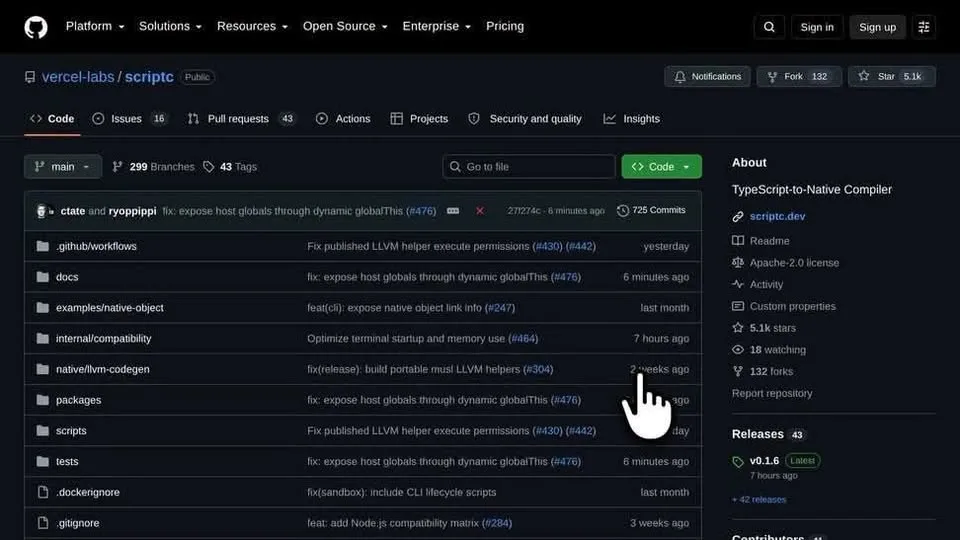
A newly released open-source tool takes TypeScript source and compiles it straight into a native binary. The point is what you leave behind: the full Node.js runtime no longer has to ship with your app.
The result the project describes is faster startup plus a leaner deployment. Instead of the usual chain of runtime plus interpreter plus your code, you end up with one compiled artifact.
The post frames it as TypeScript getting closer to "compile it and just run it." No version number, benchmark, or install command was included.
Why It Matters
Startup time and runtime overhead only matter for some apps. For the ones where they do, a native binary is a meaningfully different way to ship TypeScript.
It also shrinks what you have to deploy, which helps in containers and anywhere image size or cold start counts against you. If you build TypeScript services where boot time shows up in your numbers, this is a direction worth watching.
Does this still work?
Nobody's checked yet
Sign in to tell everyone how it went.
Continue with GoogleBe the first — one tap saves the next person an hour.
It takes 3 reports in 30 days to set the status.
More shares you might like
 AIHow to Get $20 of Free Perch AI Credits Monthly12h26 views
 AIEarshot v0.3 Ships 201 Code-Generated Sound Effects1d30 views
 AIHow to Make Trampoline AI Videos for Instagram Reels1d27 views
 ToolsHow to Get 12 Months of Adobe Express Premium Free2d36 views
 ToolsHow to Use Group By in Amazon Associates Reports3d54 views
 ToolsHow to Make Fireworks AI Videos With ChatGPT and Flow3d46 views
Comments
Join the conversation — sign in to comment.
No comments yet — start the conversation!