
Building a Deep Research Agent With LangChain and Liner
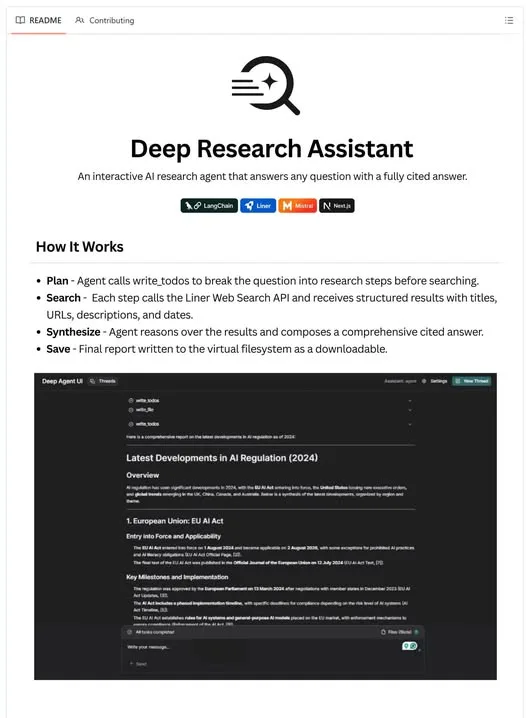
A research agent is only as good as the search layer behind it. That is the idea behind a Deep Research Agent built on LangChain Deep Agents, with Liner as the search and grounding layer. The agent plans in real time, searches the web, reasons over retrieved sources, and returns a fully cited answer.
What Happened
The agent follows a clear workflow: research, plan, search, collect sources, synthesize, cite, and save a report. Liner returns raw structured search results — titles, URLs, descriptions, and dates — and the agent handles everything after that. It decides what matters, compares sources, connects the evidence, and writes the final answer.
This separation is deliberate. Search is responsible for finding the right information; the agent is responsible for reasoning over it. Liner handles retrieval, while the agent keeps control of synthesis and how the final answer is constructed.
Every claim in the final answer is backed by a source from the retrieved results, and the full report saves as a downloadable Markdown artifact. You can also inspect the entire run in the Deep Agents UI, including the research plan, search calls, retrieved sources, and final synthesis.
Why It Matters
Separating search from reasoning makes the output trustworthy. A search API can find sources, but it should not decide which ones matter or how to combine them. Here the agent stays in control of the thinking, so the answer stays grounded in sources you can click and verify. It is a useful pattern for any research tool that needs to be transparent about where its answers come from.
Does this still work?
Nobody's checked yet
Sign in to tell everyone how it went.
Continue with GoogleBe the first — one tap saves the next person an hour.
It takes 3 reports in 30 days to set the status.
More shares you might like
 ToolsHow to Get 12 Months of Adobe Express Premium Free33m2 views
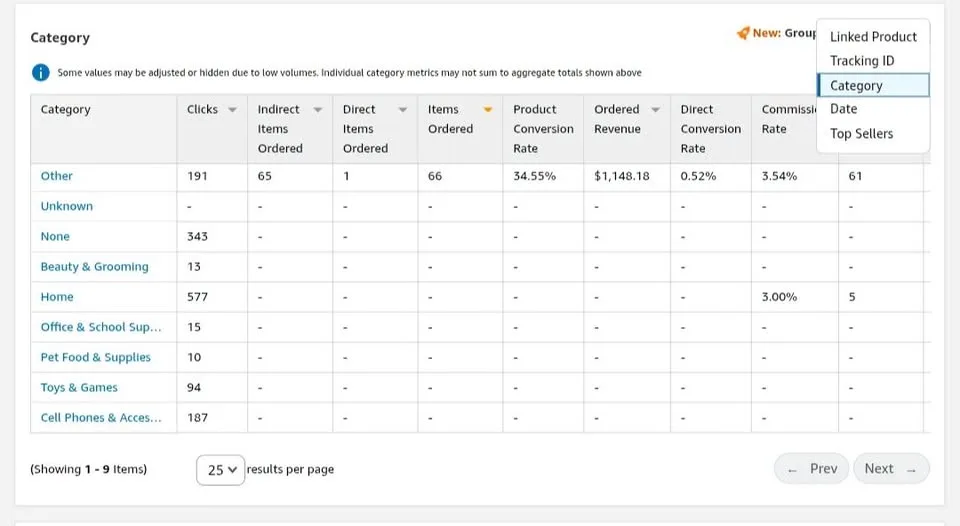 ToolsHow to Use Group By in Amazon Associates Reports1d38 views
 ToolsHow to Make Fireworks AI Videos With ChatGPT and Flow1d27 views
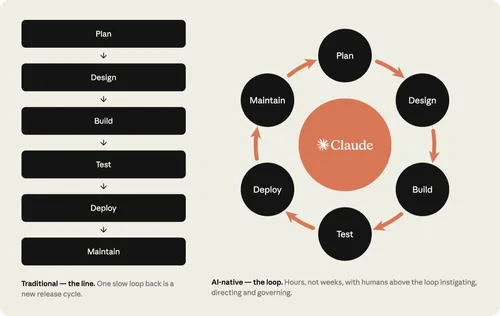 AIAnthropic's AI-Native SDLC Playbook, Explained3d41 views
 NewsTanStack Start 1.0 Is Stable4d51 views
 AIDolphin 2.9.2 Runs Uncensored Llama 3 8B on 6GB VRAM4d40 views
Comments
Join the conversation — sign in to comment.
No comments yet — start the conversation!