
OpenShip Puts Mail, Deploys and Services on Your Own Server
Renting a mail provider, a database host, and a deployment pipeline can cost more than the app they run. OpenShip puts all of it on a server you already own, and the whole platform is open source.
One VPS covers your mailboxes, your deploys, and a dozen backend services, with no per-mailbox subscriptions and no managed-service API fees.
What Happened
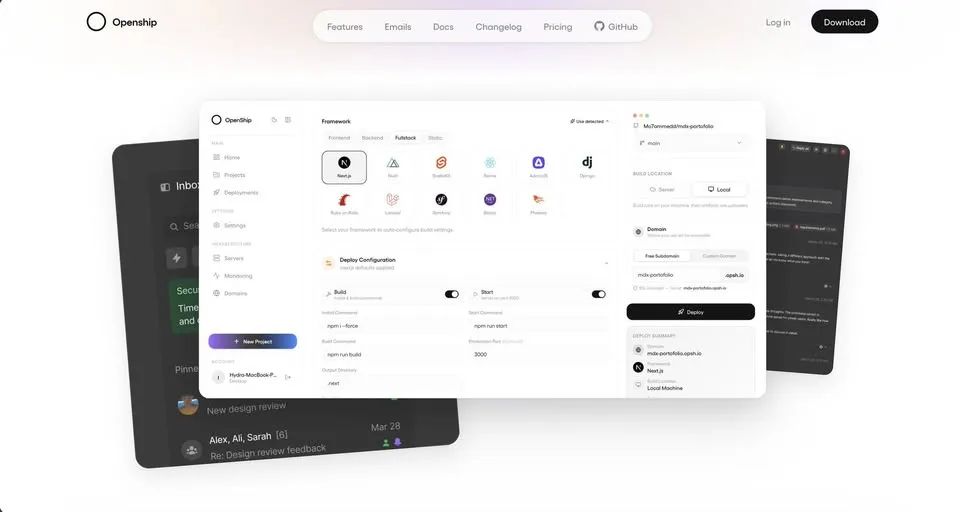
OpenShip is an open-source application platform for building, deploying, operating, and scaling applications on infrastructure you own. It aims to replace deployment tools, managed services, and infrastructure workflows with one platform, and it is available today.
The piece most people will notice first is the built-in mail server, which it says takes one click. It runs on your own VPS with unlimited domains and unlimited mailboxes, a modern webmail included, and connections from Gmail, Outlook, Apple Mail, Thunderbird, or any IMAP/SMTP client. Your applications can send mail straight through SMTP, and OpenShip promises no mailbox subscriptions or API fees and high deliverability.
On deployment, it takes any stack with Git-based deployments, zero-downtime releases, and one-click rollbacks. You get Development, Staging, and Production environments, and multi-branch deployments with isolated environments. Targets include VPSs, dedicated servers, cloud VMs, or a homelab.
Services are one-click too: Supabase, PostgreSQL, MySQL, MariaDB, MongoDB, Redis, MinIO, Meilisearch, Qdrant, RabbitMQ, Kafka, ClickHouse, and Elasticsearch, plus anything else you want to run alongside your apps.
Day to day you get live deployment logs, live request logs, real-time traffic analytics, automated backups, monitoring, secrets management, domains, automatic SSL, environment variables, scheduled jobs, and health checks. Teams get role-based access control, IP allow and block rules, rate limiting, and security rules. You can drive it from the web dashboard, a native desktop application, the CLI, or the REST API, and MCP support lets an AI agent do the work for you, so you are not living in SSH.
Why It Matters
For anyone running a small stack on a single box, the appeal is consolidation: one place for mail, deploys, services, and the monitoring around them, instead of four bills and four dashboards.
The catch is scale. Multi-server clustering for applications and databases, one-click load balancing, horizontal scaling, and built-in high availability and failover are all listed as coming soon. Today it is a single-server platform with a cluster story on the roadmap, and the promise is that you will scale from one VPS to many with the same workflow, just by adding servers.
Does this still work?
Nobody's checked yet
Sign in to tell everyone how it went.
Continue with GoogleBe the first — one tap saves the next person an hour.
It takes 3 reports in 30 days to set the status.
More shares you might like
 ToolsUltrametric open-sources a repository of startup workflows1d21 views
 AIHow to Get 4,000 Free Kiro AI Coding Credits1d31 views
 ToolsHow to Find Leaked AWS Keys in Your Own Code3d36 views
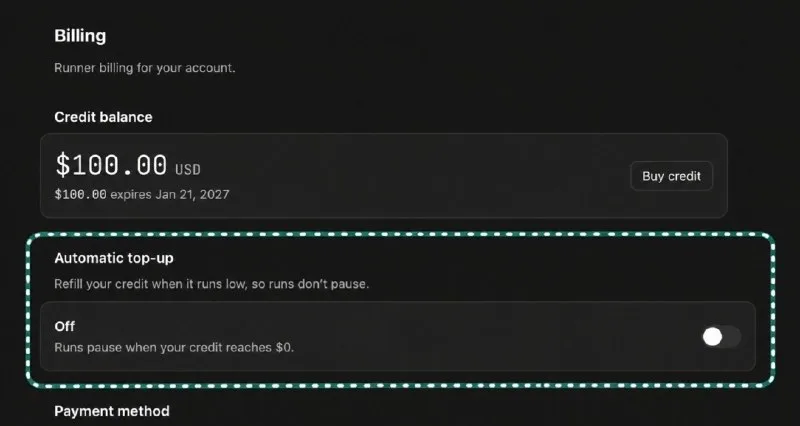 AIHow to Claim $100 in Free Entire AI Agent Credits3d60 views
 AIAudio8-TTS-Realistic Tops the Hugging Face TTS Arena4d52 views
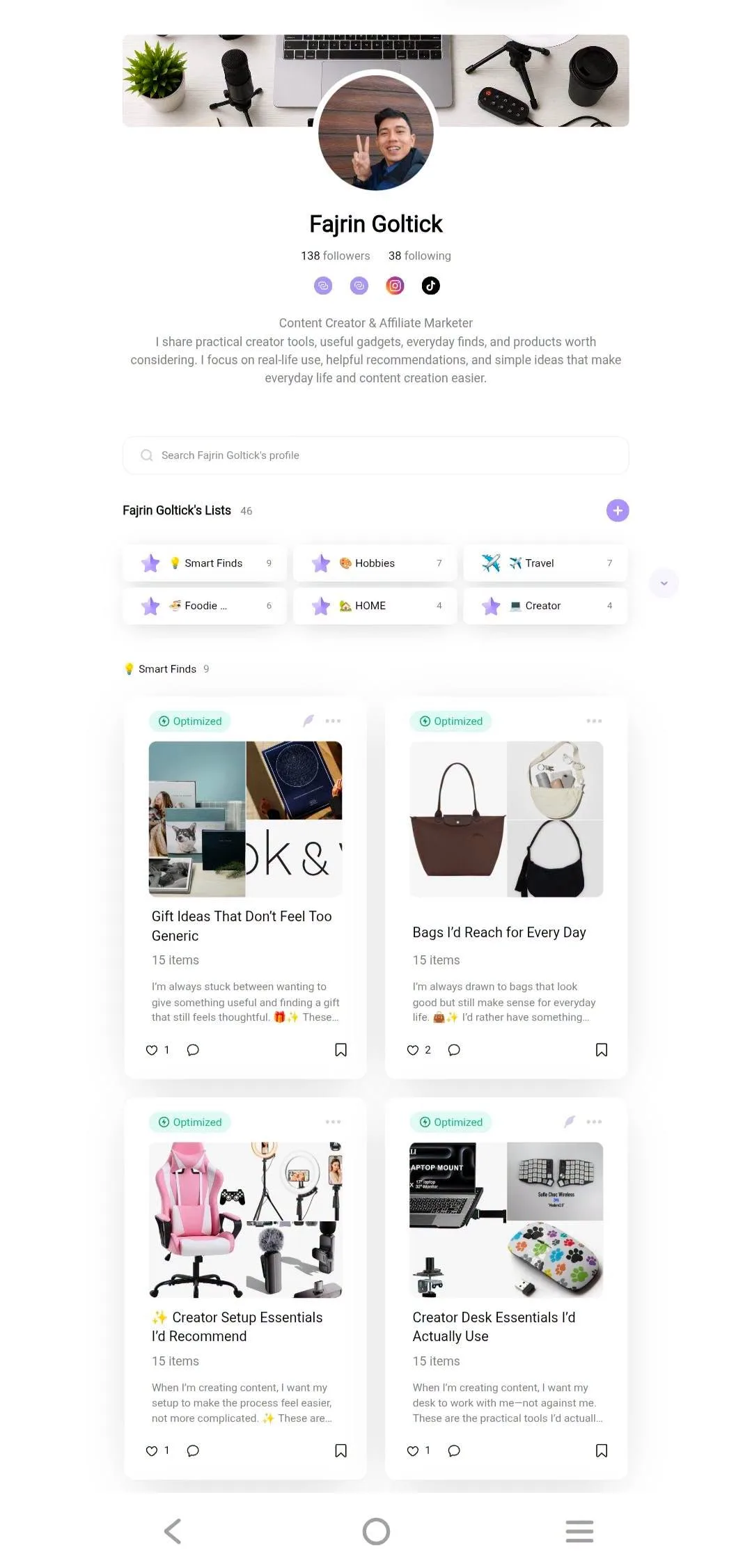 Social MediaHow to Build a Benable List People Actually Save5d51 views

Comments
Join the conversation — sign in to comment.
No comments yet — start the conversation!