
Anthropic Hackathon Winner Open-Sources Full Claude Code Setup
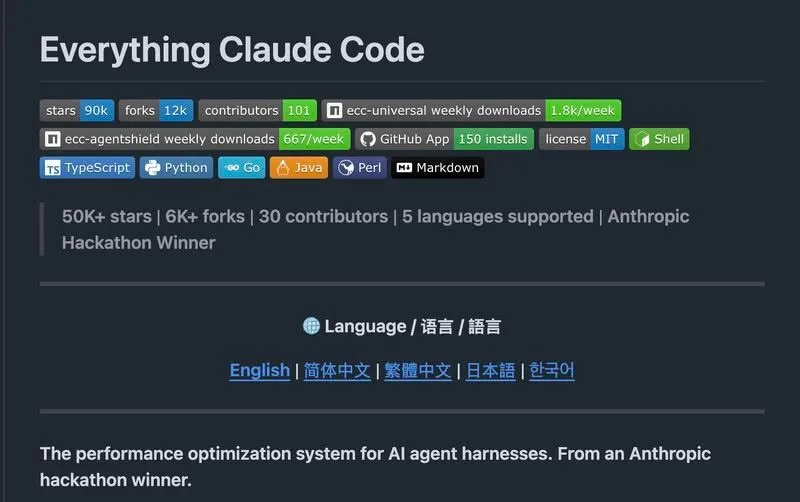
Claude Code is only as good as the setup behind it, and most people never get past the defaults. An Anthropic hackathon winner has open-sourced his entire configuration, and it has pulled in 305k+ stars on GitHub.
It is not one clever prompt file. It is agents, 100+ skill workflows, 60+ slash commands, always-on rules, hooks and a full system layer — the parts that decide whether Claude Code acts like a careful teammate or a clever stranger.
What Happened
The repo is built in seven layers, each one handling a different job.
- Agents. A planner, an architect, a code reviewer and a security auditor. Build error resolvers for Python, Java, Go, Rust and C++. End-to-end runners, refactor cleaners, doc updaters, and even a chief-of-staff agent for communication.
- Skills. Over 100 workflows, including test-driven development, eval harnesses and verification loops, token optimization and cost-aware LLM pipelines. There are backend, frontend, database, DevOps and even investor workflows, plus a continuous learning flow that turns sessions into reusable skills.
- Commands. 60+ slash commands such as
/planto break down features,/tddto enforce test-first development,/verifyto run evaluation loops,/multi-*to orchestrate multi-agent work and/pm2to manage services. - Rules. Always-on constraints: coding standards, testing requirements, security checks and language-specific best practices for Python, TypeScript, Go and others, applied to every generation.
- Hooks. The automation layer saves and loads memory across sessions, auto-evaluates outputs, suggests compaction before the context window breaks, and triggers logic on every tool call.
- System layer. Context injection modes for dev, review and research, MCP integrations like GitHub and Supabase, cross-platform scripts and installers, and a full test suite to validate the rest.
- Real examples. Next.js plus Stripe SaaS apps, Django APIs, Go microservices and Rust backends.
Why It Matters
If you have used Claude Code for anything bigger than a single file, you have probably hit the same wall: it forgets what it learned, drifts off your conventions, and re-explains itself until the context runs out. These layers are aimed straight at that. Rules keep the output consistent, hooks carry memory between sessions, and the commands turn a vague request into a plan you can check.
The real examples matter too. A Django API and a Go microservice break in very different ways, and having a reference setup for each one saves you from guessing at conventions on your own.
You can read the whole thing top to bottom before you turn any of it on, which is the right order. Start with the rules and the hooks.
Does this still work?
Nobody's checked yet
Sign in to tell everyone how it went.
Continue with GoogleBe the first — one tap saves the next person an hour.
It takes 3 reports in 30 days to set the status.
More shares you might like
 AIHow to Install Hallmark, the Anti-Slop Design Skill1d29 views
 ToolsHow to Claim GoPay Balance From IM3 Points2d33 views
 ToolsHow to Claim 10k–15k GoPay Coins From WeTV3d39 views
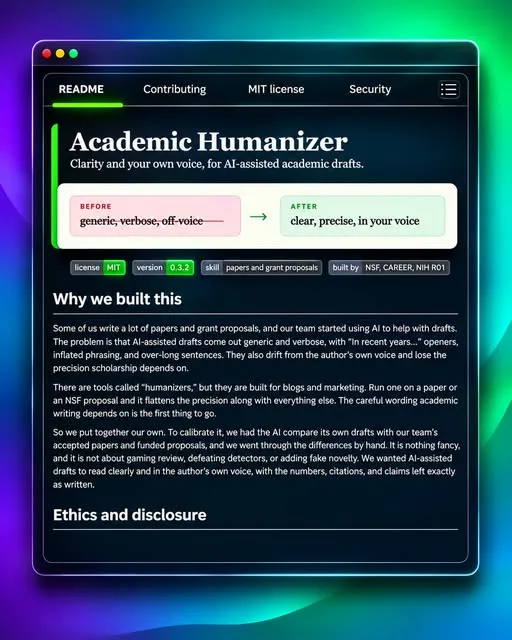 AIHow to Polish AI Academic Writing With Academic Humanizer5d51 views
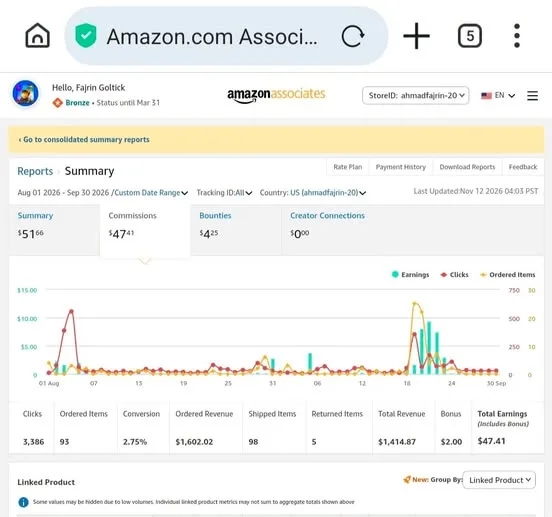 ToolsHow to Start Amazon Affiliate Marketing From Indonesia5d58 views
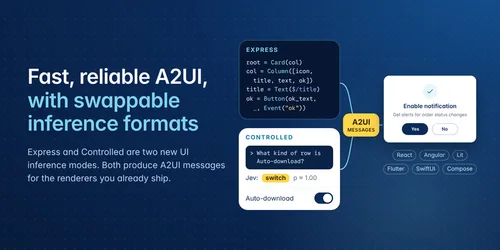 AIGoogle A2UI 1.0 Goes Stable With Native UI for Agents6d68 views



Comments
Join the conversation — sign in to comment.
No comments yet — start the conversation!