
OpenDraft Adds Citation Checks to AI Research Drafts
AI can write a research draft in minutes. The trouble is that it will happily cite papers that do not exist. OpenDraft is an open-source research engine built to close exactly that gap — it verifies the citations before they reach your draft.
That matters most for literature reviews, where a single fake reference can undermine the whole paper. It runs under the MIT License, and it checks sources against three databases instead of one.
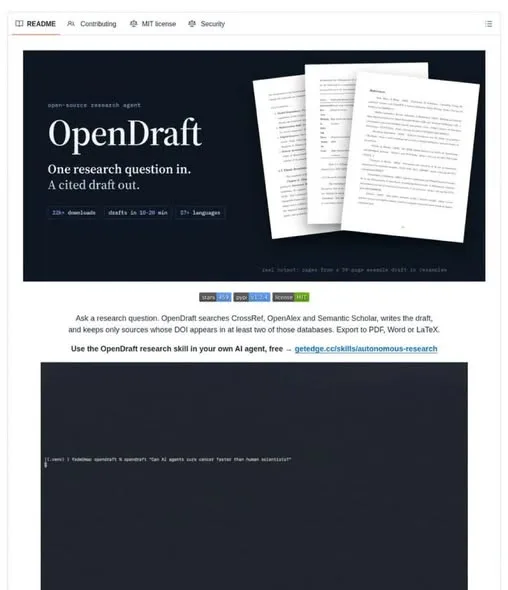
What Happened
OpenDraft takes a research question and turns it into a structured research draft. The part worth paying attention to is the citation workflow: instead of letting the AI write freely and hoping the sources are real, it finds and verifies references through CrossRef, OpenAlex and Semantic Scholar before they make it into the text.
The engine runs 19 AI agents split across five stages — research, structure, writing, citation and export. The whole path goes research question, then research, sources, verification, draft, and finally export.
It supports PDF, Word and LaTeX output, and it scales from a research paper up to a full thesis. The project is open source on GitHub under the MIT License.
Why It Matters
If you use AI for literature reviews, papers or agentic research workflows, the weak point has always been trust. A model that writes beautifully but invents its references is worse than no help at all, because you have to check every line by hand.
Routing citations through CrossRef, OpenAlex and Semantic Scholar before drafting flips that. The sources are the input, not an afterthought, and that is what makes the output usable for real academic work.
Does this still work?
Nobody's checked yet
Sign in to tell everyone how it went.
Continue with GoogleBe the first — one tap saves the next person an hour.
It takes 3 reports in 30 days to set the status.
More shares you might like
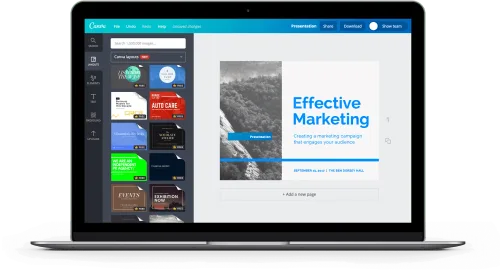 NewsOpen-slide 2.0 Adds a Visual Editor and Editable PPTX Export9h15 views
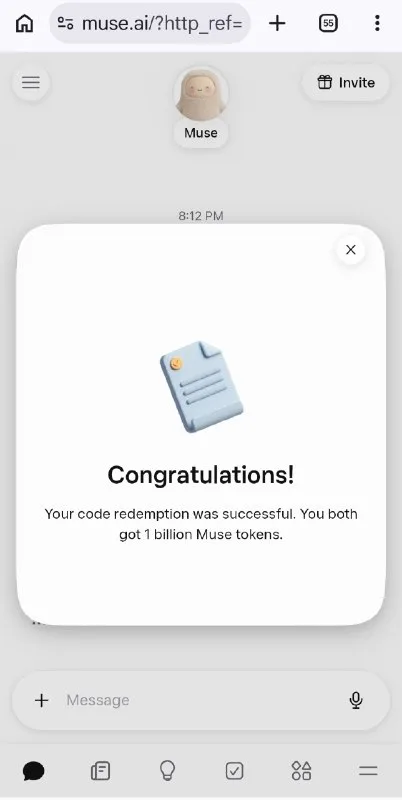 AIHow to Get 1B Free Tokens on Muse.Ai9h16 views
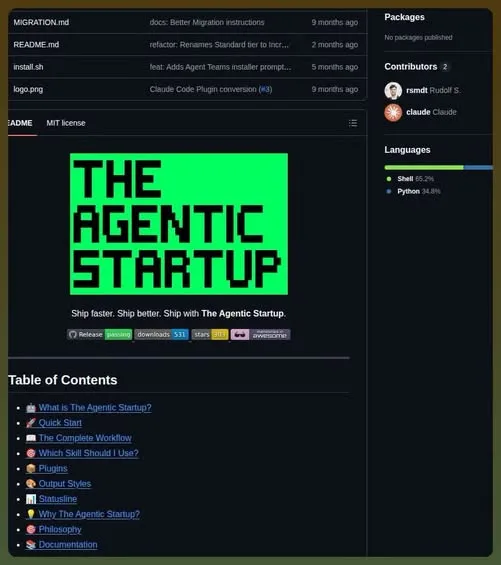 AIThe Startup Splits Claude Code Into a Five-Role Dev Team1d20 views
 ToolsHow to Build Your Own Peripherals for Muse2d31 views
 ToolsHow to Start Amazon Associates From Zero: Niche and Traffic2d45 views
 Newsgrowth.engineer Opens a GTM Catalog Built for AI Agents3d57 views

Comments
Join the conversation — sign in to comment.
No comments yet — start the conversation!